What happens when AI agents become the new banking interface?
AI agents could change how businesses interact with their banks. Instead of navigating portals and executing individual tasks, corporate clients may increasingly express financial objectives and rely on intelligent systems to coordinate activities across connected platforms.
For banks, this shift raises questions that go far beyond technology.
If AI agents become intermediaries between corporate clients and banking services, who owns the customer relationship? How can banks remain relevant when interactions take place outside their own digital channels? And how can they make their services accessible without losing control over financial actions?
This whitepaper explores how AI agents could reshape corporate banking interactions, what this means for customer relationships and banking infrastructure, and how banks can prepare for different possible futures.
Discover why banks may need to look beyond their own digital interfaces to remain relevant as corporate banking interactions evolve.
In this whitepaper you will learn:
- How AI agents could transform the way corporate clients access and use banking services
- What happens when external AI agents become intermediaries between banks and their clients
- Why existing banking capabilities could become the foundation for new forms of interaction
- How banks can enable agent-driven interactions while maintaining authority over financial actions
- What portal-led, hybrid and agent-first banking could mean for banks' strategic priorities
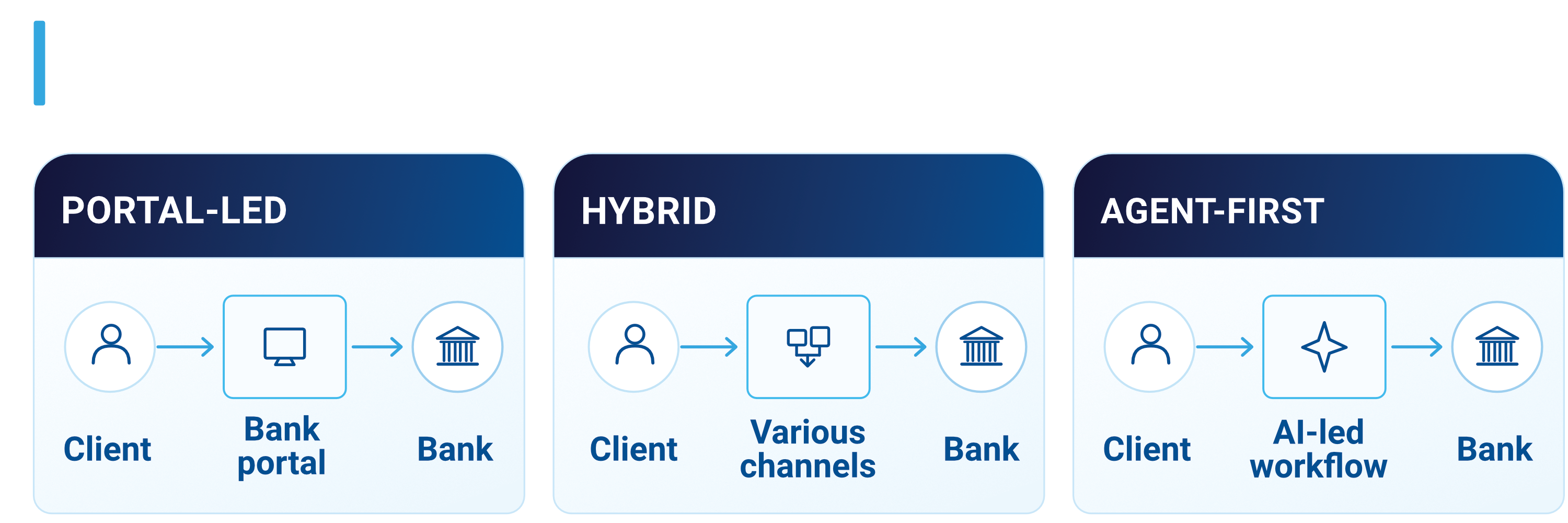
Three Possible Futures for Corporate Banking
Will banks continue to own the customer interface, or will AI agents change how corporate clients access financial services?
The future may not follow a single path. Three interaction models could emerge and coexist:
Portal-led Banking | Hybrid Banking | Agent-first Banking
Explore what these scenarios could mean for banks.
What This Means for Banks
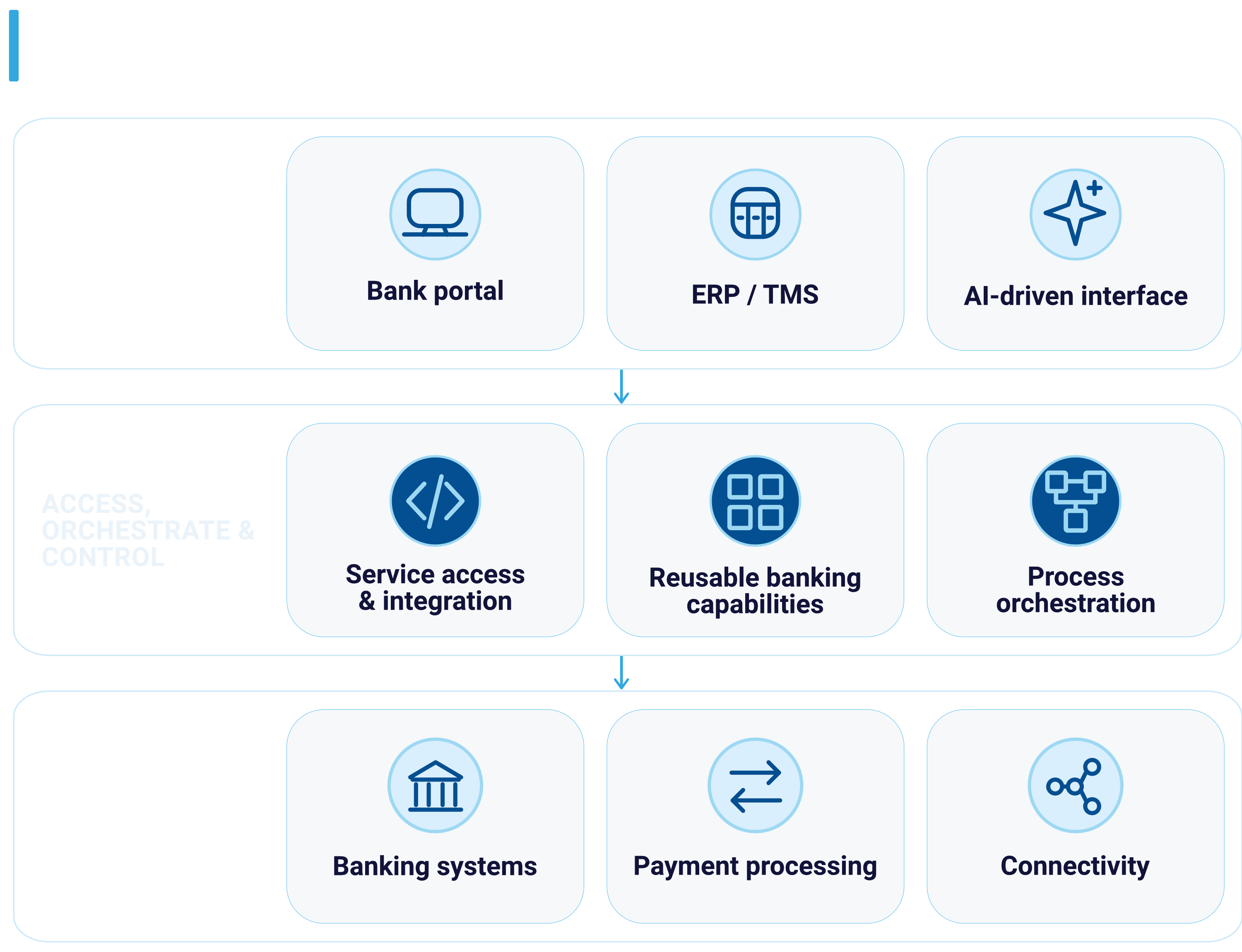
As AI agents become part of corporate banking interactions, the role of banks could extend beyond their own digital channels.
External AI-driven interfaces could influence how banking services are accessed and selected, potentially reducing opportunities for direct customer engagement.
For banks, this creates a strategic challenge: making their services accessible and reliable across different interaction models while maintaining control over financial actions.
Emerging interaction models can build on existing banking infrastructure while requiring additional integration and adaptations to access, authorisation and control mechanisms.
The strategic priority is not to predict which interface will prevail, but to ensure that banks remain relevant, accessible and in control as new forms of interaction emerge.
Download the Whitepaper
Preparing for the Future of Corporate Banking
How can banks remain relevant as AI agents change the way corporate clients interact with financial services?
Explore the potential impact on customer relationships, banking capabilities and financial control, and discover how banks can prepare for different interaction models.