Small and medium-sized enterprises represent the backbone of the European economy – yet their digital banking experience was never truly designed for how SMEs actually run their businesses.
While banks have heavily invested in digital retail experiences and sophisticated corporate banking platforms for large enterprises, SMEs often sit between these two worlds. Their financial needs are more complex than retail banking can support, yet far less specialised than the systems designed for global treasury operations.
This whitepaper explores why SMEs remain one of the most underserved segments in banking and introduces the SME Digital Banking Model – a framework that connects core banking capabilities with the everyday financial workflows of SMEs.
Download the whitepaper to learn how banks can unlock new growth by redesigning digital banking experiences for the SME segment.
In this whitepaper you will learn:
- why SMEs remain one of the most underserved customer segments in banking
- how fintech challengers are reshaping SME expectations
- why traditional corporate banking platforms struggle to support SME workflows
- what the SME Digital Banking Model looks like
- how banks can unlock new growth by redesigning SME digital experiences
Free PDF · 15+ pages · A practical thought leadership perspective
Introducing the SME Digital Banking Model
To serve SMEs effectively, banks need a digital banking model that reflects how smaller businesses actually manage their finances.
Instead of navigating feature-driven banking portals, SMEs require a unified financial environment that supports their everyday operational tasks – from reviewing liquidity and executing payments to planning future cash positions.
The SME Digital Banking Model provides a framework for designing digital banking experiences around these workflows. It connects core banking capabilities with the operational tools and financial processes SMEs rely on in their daily business activities.
The model is built on three core design principles.
Why It Matters for Banks
Redesigning SME digital banking around these principles creates significant strategic value for financial institutions.
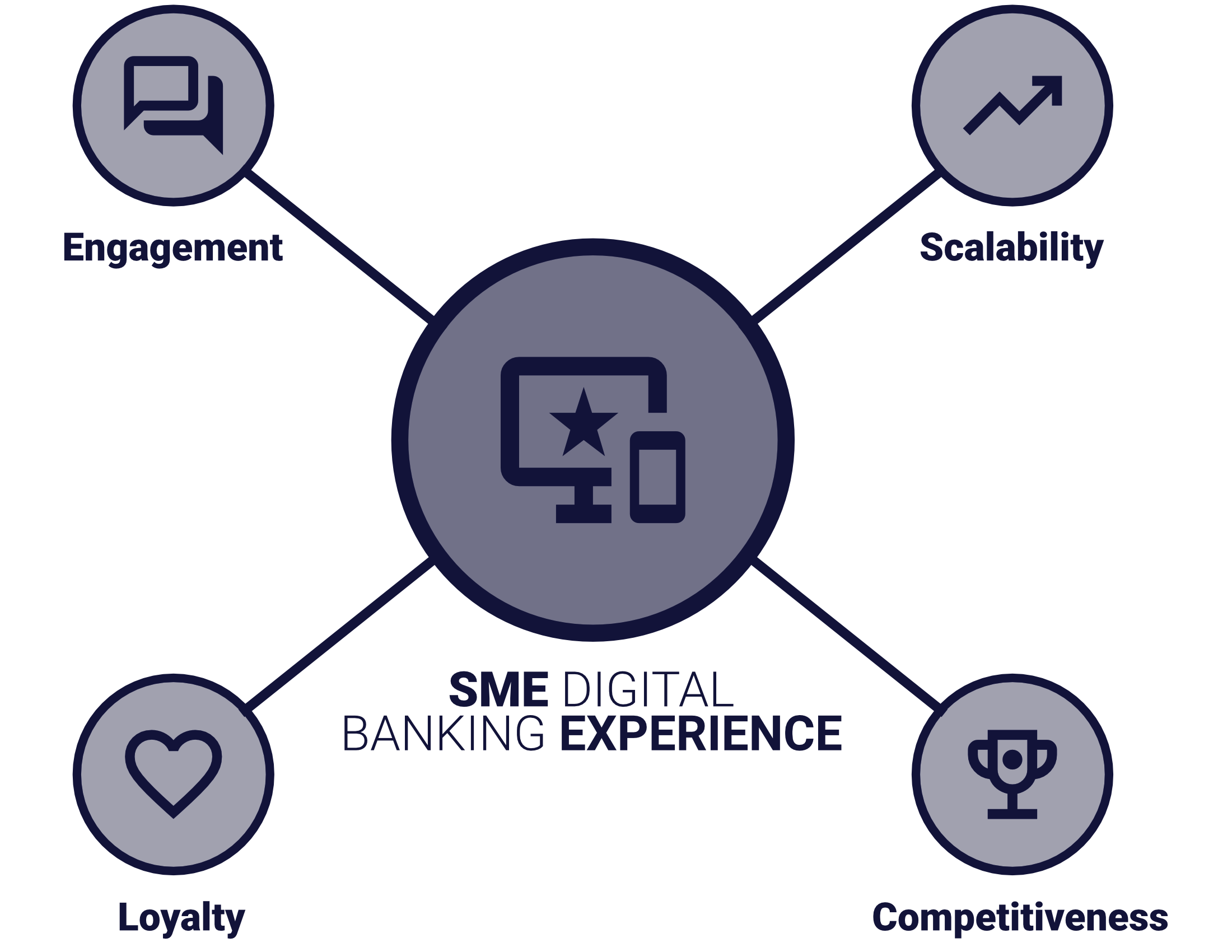
Simplified, workflow-driven experiences increase digital engagement among SME customers. Clear interfaces and integrated processes make banking platforms easier to use and encourage more frequent interaction.
Improved digital experiences also strengthen customer loyalty. SMEs are more likely to remain with financial partners that actively simplify their financial operations and integrate seamlessly with their business systems.
At the same time, focusing on standardised SME use cases allows banks to scale digital services more efficiently while reducing operational complexity and support costs.
Banks that invest early in SME-centric digital banking can therefore strengthen their competitive position in one of the most important growth segments in financial services.
Get your copy now
Discover how banks can redesign digital banking experiences for SMEs and unlock the full potential of one of the most important growth segments in banking.
The whitepaper explores the structural challenges in SME banking, the market forces reshaping the segment and the SME Digital Banking Model as a practical framework for building modern SME digital experiences.
Download the whitepaper to learn how banks can turn SME banking into a strategic growth opportunity.